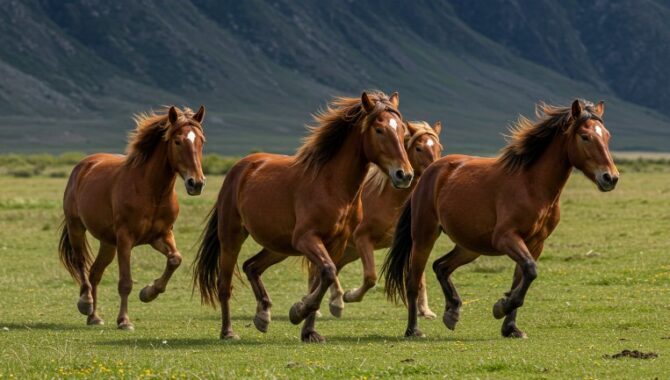
Wild horses stir something primal in the human imagination—freedom, resilience, survival.
From high deserts to marshlands, these populations live on the edge of civilization, evolving unique behaviors, physiologies, and even diets that reflect the extreme environments they inhabit.
While some are feral descendants of domestic horses, their adaptations often rival those of truly wild species.
1. Przewalski’s Horse – Grassland Specialist with Ancient Lineage
Przewalski’s horses are the last remaining truly wild horse species and live in the arid steppe ecosystems of Mongolia, especially around Khustain Nuruu and Takhiin Tal. These regions are defined by extreme temperature swings, scarce water, and sparse vegetation.
Przewalski’s horses have adapted by developing robust digestive systems that efficiently extract nutrients from tough, dry grasses like feather grass and Siberian fescue. They also form tight social groups, usually harems led by a dominant stallion.
During winter, their grazing behavior shifts to focus on building fat reserves in warmer months, which allows them to survive periods of low forage availability. Their upright manes, stocky frame, and short legs make them physically distinct from domestic breeds and better suited for retaining heat during cold months.
Przewalski’s Horse – Ecological Adaptations
| Trait | Description |
| Primary Forage | Feather grass, wild rye, Siberian fescue |
| Nutritional Adaptation | Builds subcutaneous fat in summer to endure harsh winters |
| Water Access | Seasonal streams and snowmeltcan go several days without water |
| Social Structure | Stable harems with one stallion and multiple mares |
| Habitat Strategy | Roams over 300 km² to graze dispersed vegetation |
2. Mustang – Hardy Foragers of the Western Frontier
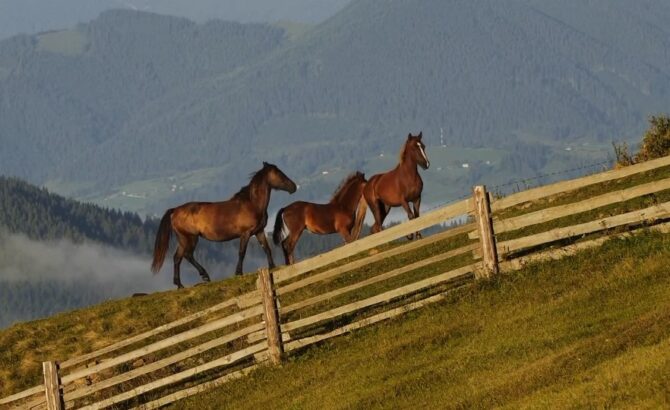
The Mustang is a feral horse population descended from Spanish colonial breeds. Found mainly in arid regions like Nevada, Wyoming, and Utah, they survive on sparse vegetation including sagebrush, saltbush, and desert bunchgrass. Their ability to utilize a wide range of forage types has allowed them to thrive in nutrient-poor environments.
Mustangs often travel over 20 miles per day to locate forage and water, with movements driven by seasonal shifts in vegetation availability. In some regions, overgrazing and mineral deficiency—especially of selenium and magnesium—pose health concerns. Their natural hoof wear is balanced by the rough terrain, though they often face overpopulation and removal by federal land agencies.
Mustang – Survival Characteristics
| Trait | Description |
| Primary Forage | Sagebrush, rabbitbrush, blue grama, saltbush |
| Nutritional Adaptation | Low nutrient threshold tolerance; efficient digestion of dry forage |
| Water Access | Travels long distances to locate water holes or cattle troughs |
| Social Structure | Band structure; bachelor herds are common |
| Habitat Strategy | Desert, high plain, and sage steppe roaming |
3. Brumby – Australia’s Wild Bush Horses
View this post on Instagram
Brumbies are the wild horses of Australia, descended from escaped or abandoned colonial horses. They populate diverse landscapes, including the Australian Alps, semi-arid plains, and tropical savannas. Their diet consists largely of native grasses like wallaby grass, as well as tree bark, reeds, and dry shrubs during drought.
Because of Australia’s generally nutrient-poor soils, Brumbies have adapted by becoming exceptionally frugal feeders, capable of extracting energy from vegetation with high silica content. However, this also causes rapid dental wear. Their role in local ecosystems is controversial, as they compete with native marsupials and can degrade sensitive habitats.
Brumby – Bushland Grazing Profile
| Trait | Description |
| Primary Forage | Wallaby grass, spinifex, bark, dry scrub |
| Nutritional Adaptation | Thrives on low-protein forage; high silica tolerance in dentition |
| Water Access | Relies on billabongs, ephemeral streams, and cattle troughs |
| Social Structure | Small bands; stallions form bachelor groups |
| Habitat Strategy | Wide dispersal in open plains and foothill ecosystems |
4. Namib Desert Horse – Salt-Resilient Desert Wanderer
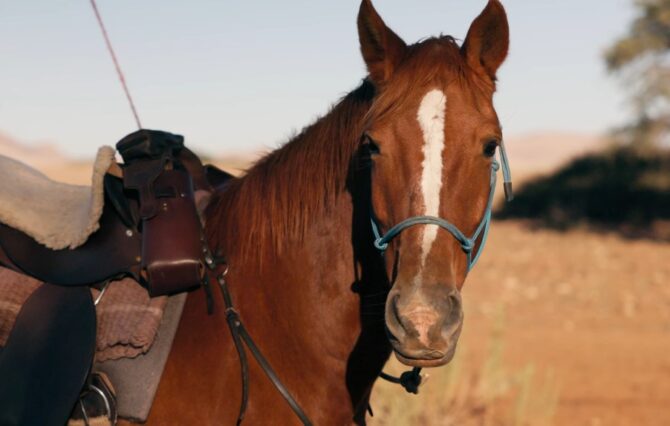
The Namib Desert horse survives in one of the most inhospitable terrains on Earth—Namibia’s southern desert. These horses are believed to be descendants of German cavalry horses left behind in the early 1900s. They rely on brackish water and highly saline forage such as desert grasses and shrubs.
Due to the desert climate, they graze mostly at dawn and dusk to avoid heat stress and minimize water loss. These horses exhibit a high tolerance to salt, thanks to adaptations in kidney function that help regulate electrolytes. Their population remains small and isolated, with no new genetic input, making them a conservation priority.
Namib Desert Horse – Drought Adaptation Matrix
| Trait | Description |
| Primary Forage | Desert grasses, Atriplex (saltbush), and drought shrubs |
| Nutritional Adaptation | High salt tolerance; renal function conserves water and excretes excess salt |
| Water Access | Manmade boreholes and rare natural springs |
| Social Structure | Loose herds; sometimes solitary due to forage scarcity |
| Habitat Strategy | Occupies windbreaks and rocky outcrops to conserve body heat |
5. Konik – Rewilding Agent in European Wetlands
The Konik horse is a semi-wild breed associated with rewilding initiatives in Poland and the Netherlands. These horses thrive in bogs and wetlands, eating a varied diet including reeds, sedges, willow bark, and aquatic plants. They graze flooded meadows year-round, using their strong hooves to navigate marshy terrain without injury.
Their foraging helps maintain biodiversity by limiting woody plant encroachment, which benefits wetland birds and amphibians. Due to their ecological value, Koniks are released in nature parks where they contribute to habitat management without the need for human mowing or grazing rotation.
Konik – Wetland Ecology Profile
| Trait | Description |
| Primary Forage | Reed canary grass, sedges, mosses, bark of softwood trees |
| Nutritional Adaptation | Can digest aquatic and fibrous vegetation efficiently |
| Water Access | Abundant in wetlands and streams |
| Social Structure | Stable family bands; seasonal aggregation around water bodies |
| Habitat Strategy | Cold tolerance and hoof structure suit marshy, flood-prone environments |
6. Camargue Horse – Guardians of French Wetlands
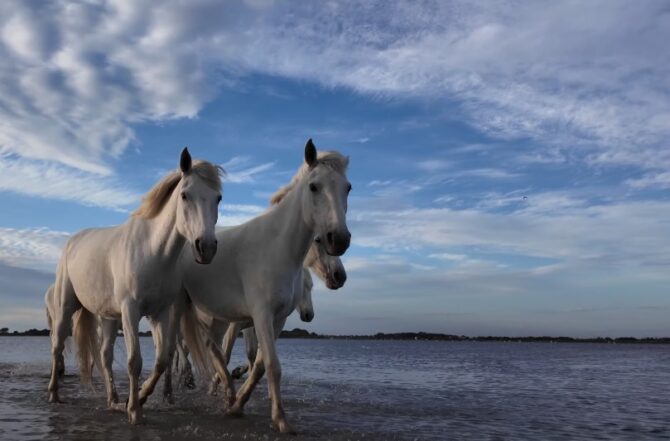
Camargue horses are semi-wild animals that inhabit the Rhône delta in Southern France. They graze on halophytic plants such as sea lavender, samphire, and cordgrass. These plants are rich in sodium and potassium, resulting in physiological traits that help them maintain fluid balance.
Their coat turns white early in life, an adaptation that may help reflect sunlight in the marshy, open terrain. These horses are managed by “guardians” and live largely unassisted, contributing to the maintenance of traditional pastoral systems.
Camargue Horse – Salt Marsh Adaptation Grid
| Trait | Description |
| Primary Forage | Salt-tolerant plants: sea lavender, samphire, marsh grasses |
| Nutritional Adaptation | Salt tolerance, strong hooves resistant to marsh abrasions |
| Water Access | Brackish marsh water and freshwater patches |
| Social Structure | Herded seasonally; small free-living groups most of the year |
| Habitat Strategy | Uses shallow water and mud to deter insects and regulate temperature |
7. Haflinger – Alpine Digestive Efficiency Redefined
The Haflinger horse, while not wild today, stands out for its historical relationship with semi-feral grazing in rugged Alpine environments. Bred in the mountains of South Tyrol, Haflingers often subsisted on steep pastures with limited access to hay or grain. Their digestive system became highly efficient at extracting energy from coarse forage like alpine meadow grasses, heather, and woody shrubs.
According to Equus Victu, this metabolic resilience is one reason Haflingers are considered “easy keepers”—horses that maintain body weight with less feed than other breeds. Overfeeding modern Haflingers on grain-rich diets can lead to metabolic issues like EMS (Equine Metabolic Syndrome), a stark contrast to their low-input origins.
Behavioral Note: Their mountain ancestry contributes to a bold yet calm temperament, making them uniquely surefooted and ideal for therapeutic riding, endurance treks, and even farming in hard-to-reach regions.
| Trait | Description |
| Primary Forage | Low-protein alpine grasses, wild herbs, moss |
| Nutritional Adaptation | Metabolically efficient; prone to obesity on high-carb feed |
| Water Access | Streams, glacier-fed troughs |
| Social Structure | Originally grazed in herds; now kept in controlled settings |
| Habitat Strategy | Ideal for steep terrain; handles variable elevation and weather patterns |
8. Pottok – Woodland Survivor with Ancient Roots
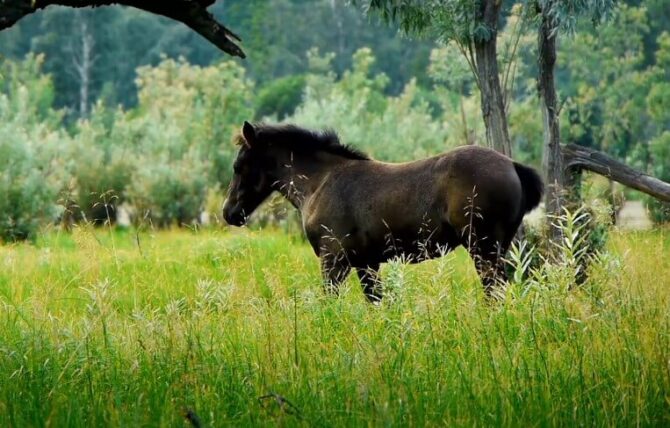
Pottoks are small, semi-wild ponies native to the Pyrenees, well-adapted to forested environments. Their diet is highly diverse, including acorns, brambles, ferns, and seasonal mountain herbs. Pottoks are reclusive and avoid human contact, making them difficult to monitor.
Their natural browsing patterns reduce fire hazards by clearing underbrush, which contributes to forest health. Pottoks also exhibit seasonal vertical migration—moving to higher pastures in summer and lower wooded valleys in winter.
Just because Pottoks are semi-wild ponnies, that doesn’t make them good pets.
Pottok – Forest Forager Breakdown
| Trait | Description |
| Primary Forage | Acorns, chestnuts, ferns, shrubs, wild berries |
| Nutritional Adaptation | Multi-source foraging strategy ensures year-round energy availability |
| Water Access | Springs, forest puddles, and snowmelt |
| Social Structure | Small bands, often matriarchal |
| Habitat Strategy | Shifts altitude seasonally to follow forage cycles |
9. Chincoteague Ponies – Island Specialists with Salty Diets
View this post on Instagram
Chincoteague ponies live on Assateague Island, a harsh barrier ecosystem with salt marshes, sandy dunes, and limited freshwater. Their diet includes saltgrass, poison ivy, and beach shrubbery. These ponies drink up to twice the water of mainland horses to process the high sodium content of their forage.
As a result, they are prone to bloated bellies—a survival mechanism, not a disease. The population is split between the Maryland and Virginia sides of the island and managed via annual roundups to prevent overgrazing.
Chincoteague Pony – Island Adaptation Map
| Trait | Description |
| Primary Forage | Saltgrass, cordgrass, sea lavender, coastal weeds |
| Nutritional Adaptation | High water intake to dilute sodium; efficient electrolyte regulation |
| Water Access | Rainwater pools and artificial ponds |
| Social Structure | Managed herds; mares form central units |
| Habitat Strategy | Seeks shade in dunes; grazes tidal flats during low tide |
10. Sorraia – Iberian Minimalist with Ancient Traits
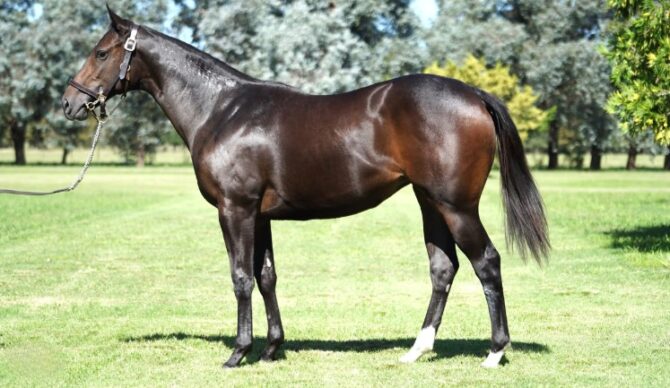
Sorraia horses are native to southern Portugal and are considered close relatives of prehistoric Iberian horses. They browse Mediterranean vegetation, including evergreen scrub, cork oak leaves, and dry forage with little nutritional value.
Their survival strategy hinges on minimal movement and low metabolic demands. The Sorraia’s gut microbiome supports efficient breakdown of lignified plant material. However, they are critically endangered due to a limited range and low population diversity.
Sorraia – Minimalist Survival Data
| Trait | Description |
| Primary Forage | Evergreen shrubs, cork oak, dry scrub |
| Nutritional Adaptation | Slow digestion of low-quality forage; retains nutrients well |
| Water Access | Seasonal streams, dew in the early morning |
| Social Structure | Tight bands with a single breeding stallion |
| Habitat Strategy | Occupies dry woodland; forages slowly to conserve energy |