
Gut health can feel confusing—especially when you’re trying to help your dog feel their best. I’ve been there, sorting through labels and advice, and wondering what actually matters. Here’s a clear, practical guide to help you figure out whether your pup needs prebiotics, probiotics, or a smart combo of both.
Start with the Basics
Keeping it simple helps. Prebiotics and probiotics support the same goal—a balanced gut—but they do it in different ways.
- Prebiotics = food for good bacteria (usually specific fibers)
- Probiotics = live beneficial bacteria
- Synbiotics = products that combine both
What Are Prebiotics?

Prebiotics are types of fermentable fiber that pass through the small intestine undigested and become fuel for the good microbes in the colon. When those microbes “eat” prebiotics, they produce short-chain fatty acids (SCFAs) that help support the gut lining, stool quality, and immune function.
Prebiotics, including certain fiber supplements for dogs, help ‘feed’ beneficial bacteria and support a healthier microbiome.
When Prebiotics Can Help
- Soft or inconsistent stools related to diet changes
- A dog transitioning to a new food
- Gas or mild digestive upset without other red flags
- Long-term gut maintenance for dogs with sensitive stomachs
Simple Ways to Add Prebiotics
- Choose foods with named prebiotic fibers (inulin, FOS, beet pulp)
- Use a vetted canine prebiotic powder as directed
- Add fiber-rich whole foods in moderation (e.g., a small amount of plain canned pumpkin)
Quick tip: Introduce prebiotic fiber slowly. Too much, too fast can lead to gas or looser stools.
What Are Probiotics?
Probiotics are live microorganisms (beneficial bacteria or yeast) that, when given in the right amounts, can support gut balance. Think of them as friendly “guests” that help crowd out less desirable microbes and support normal digestion.
When Probiotics Can Help
- Loose stools during stress (boarding, travel, vet visits)
- Digestive changes after antibiotics
- Occasional diarrhea linked to diet indiscretion
- Support during transitions (new food or environment)
Choosing Probiotic Strains
- Specific strains listed (e.g., Lactobacillus rhamnosus GG, Bifidobacterium animalis)
- CFU count (colony-forming units) per dose
- Storage instructions (some require refrigeration)
- Clear expiration date and quality assurances
Can You Use Them Together? (Synbiotics)
Yes. Pairing prebiotics with probiotics can be a smart approach. The prebiotic supports the survival and activity of the probiotic while nourishing your dog’s resident microbes. Many veterinary-formulated synbiotics combine targeted strains with gentle fibers for daily use.
Good Times to Consider a Combo
- After antibiotics (with vet guidance)
- During a food transition
- For dogs with recurring mild digestive issues
- When you want steady, long-term gut support
How to Pick the Right Option for Your Dog

Match the Tool to the Situation
- Mild stool changes or maintenance: try a prebiotic first
- Stress-related or antibiotic-associated loose stools: consider probiotics
- Sensitive system or frequent changes: a synbiotic can cover both bases
Dosing and Timing
- Follow label directions for your dog’s weight
- Start low and go slow with prebiotic fibers
- For probiotics, consistency matters—give at the same time daily
- Separate from antibiotics by at least 2–3 hours when possible (ask your vet)
Product Quality Checklist
- Named strains and CFU per serving
- Transparent ingredient list
- Clear storage guidance
- Third-party testing or veterinary formulation is a plus
Label check: If a product says “probiotic” but doesn’t list strains or CFUs, keep looking.
Signs Your Dog Might Benefit
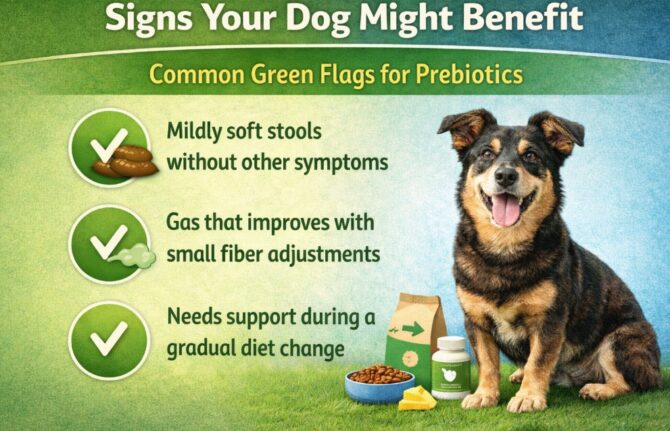
Common Green Flags for Prebiotics
- Mildly soft stools without other symptoms
- Gas that improves with small fiber adjustments
- Needs support during a gradual diet change
Common Green Flags for Probiotics
- Temporary diarrhea linked to stress or travel
- Stool changes during/after antibiotics
- Occasional digestive upset after scavenging (monitor closely)
If you see red flags-blood in stool, ongoing vomiting, lethargy, weight loss, or symptoms lasting more than 24–48 hours—call your veterinarian.
Safe Use and Everyday Habits
Keep It Simple
- Introduce one change at a time so you can tell what’s working
- Maintain a consistent diet and feeding schedule
- Keep fresh water available at all times
Storage Matters
- Follow the label—some probiotics need refrigeration
- Keep lids tightly closed and avoid heat and moisture
Common Mistakes to Avoid
- Switching foods and adding supplements at the same time
- Overdoing fiber on day one (start with a partial dose)
- Using human products not designed for dogs
- Ignoring labels that don’t list strains, CFUs, or storage needs
FAQ
Can I give my dog prebiotics and probiotics daily?
Yes, many dogs do well with daily use, especially with synbiotic products. That said, long-term needs vary—check in with your vet if you’re using them beyond a few months or if symptoms persist.
How long until I see results?
Some dogs show improvement in stool quality within a few days. For steady microbiome support, give it 2–4 weeks of consistent use.
Are there side effects?
The most common issue is temporary gas or softer stools—usually from starting too fast with fiber. Reduce the dose and increase gradually. If symptoms worsen or new signs appear, stop and contact your vet.
Do all dogs need these?
Not necessarily. Many healthy dogs do fine without supplements. Use them with purpose—specific symptoms, transitions, or vet-recommended support.
Can puppies take probiotics?
Often yes, but use products formulated for puppies or approved by your veterinarian. Always follow weight-based dosing.
The Bottom Line
Prebiotics and probiotics support gut health in different, complementary ways. Choose based on your pup’s current needs, go slowly, and stick with products that are transparent about what’s inside. If you’re ever unsure—or if symptoms are severe or persistent—your veterinarian is your best guide. Here’s to calmer tummies, better stools, and a happier pup.